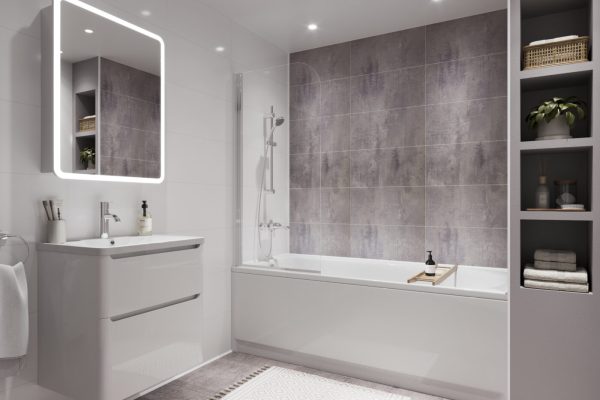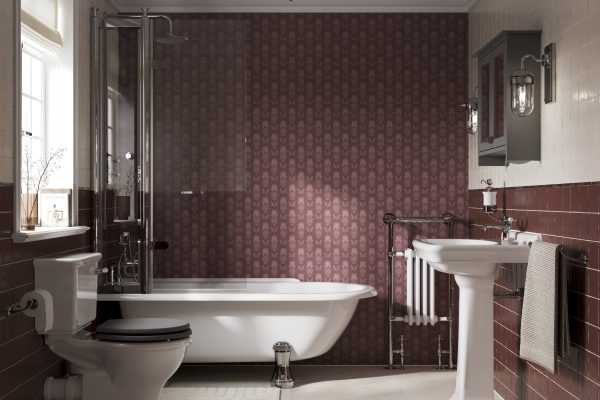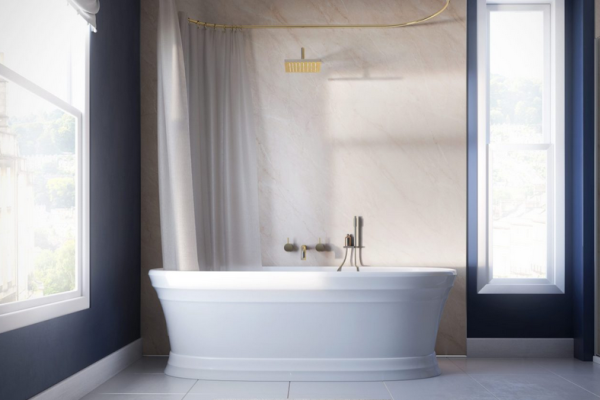
White bathrooms have had a long run. Clean, safe, easy to sell a house with. But more homeowners are choosing the opposite direction this year, reaching for deep greens, inky navy, and charcoal instead of anything bright or neutral. If you’re browsing bathroom colour ideas and finding yourself drawn to the darker end of the swatch book, you’re part of a genuine shift, not just a passing trend.
Why Deep Hues Are Having a Moment
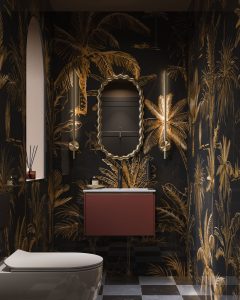
Dark bathroom colour ideas have moved from bold statement to mainstream choice for a few practical reasons.
The first is confidence. People are more willing to treat the bathroom as a proper room in the house, not just a functional space to get in and out of. A deep green or charcoal scheme signals intention. It looks designed rather than default.
The second is light. Bathrooms are often the smallest, most enclosed rooms in a house, and for years that meant white was the only “safe” option. But darker tones, used well, can make a small space feel cocooning rather than cramped. Paired with the right lighting, a navy or charcoal bathroom often feels more luxurious than a white one ever could.
The third reason is durability, at least visually. Pale grout and light tiles show every mark. Deep colours hide watermarks, soap residue, and everyday wear far better, which matters in a room that gets used daily by the whole household.
Green, Navy, and Charcoal: What Each One Brings
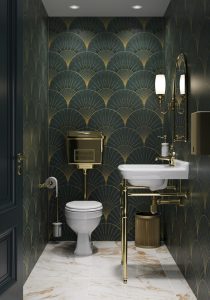
Deep green has become the most requested shade for anyone exploring dark bathroom colour ideas. It sits between bold and calming, drawing on the same biophilic appeal as natural stone and timber. Forest, olive, and bottle green all work well in a bathroom, particularly when paired with warm metals and natural textures.
Navy blue feels classic rather than trend-driven, which is part of why it keeps coming back. It pairs naturally with white sanitaryware and reads as timeless in a way that brighter blues don’t always manage. Navy also has a slightly nautical, grounded quality that suits both period and modern bathrooms equally well.
Charcoal is the most versatile of the three. It behaves almost like a neutral, sitting comfortably alongside both warm and cool metal finishes, and it works in bathrooms of any size. Charcoal walls with white fittings give a sharp, contemporary look. Charcoal with warm wood and brass tips the same room toward something cosier.
Which Metal Finishes Work Best
Getting the metal finish right is what separates a moody bathroom that feels considered from one that feels heavy or cold.
Brushed brass is the strongest pairing for deep greens. The warmth in brass lifts a green scheme and stops it from feeling too sombre, especially when used on taps, shower fittings, and mirror frames.
Matt black suits charcoal and navy particularly well, since the tones sit close enough on the colour spectrum to feel deliberate rather than clashing. It’s a popular choice for anyone after a more dramatic, architectural finish.
Brushed nickel or chrome works as a cooler counterpoint to navy. It keeps the scheme feeling crisp rather than cave-like, which matters in smaller bathrooms where too much dark metal can start to close the room in.
Copper is the boldest option but pairs beautifully with charcoal in particular, adding warmth without competing with the depth of the wall colour.
As a general rule, pick one metal finish and stick to it throughout the room. Mixing two or three finishes in a dark bathroom tends to fight against the calm, cohesive look that makes these colour schemes work in the first place.
How Wall Panels Make Dark Schemes Easier to Commit To
One of the reasons moody bathrooms have become more achievable is the range of finishes now available in wall panelling, rather than paint or tile alone.
Painted dark bathrooms have a maintenance issue that doesn’t get talked about enough. Paint in a high-moisture room needs to be specifically rated for bathrooms, and even then it can show steam damage and watermarks over time, particularly around showers and baths. Dark tiled walls bring back the grout problem, and grout lines on a charcoal or navy tile show up far more obviously than they do on white.
Showerwall panels solve both issues. The surface is completely waterproof and non-porous, so there’s no risk of steam damage or staining, and because there’s no grout, there’s nothing to discolour over time. A deep charcoal or bottle green panel looks the same in five years as it did on day one.
This is also where the newest decors have moved the conversation forward. The recent book-matched designs, where the pattern flows continuously across adjoining panels rather than repeating, bring an extra layer of depth to darker finishes in particular. On a deep, textured colour, that continuous flow reads as something closer to a feature wall in a high-end hotel than a panelled bathroom.
Browse the full range of dark bathroom colour ideas in panel form, including charcoal, navy, and deep green finishes, to see how they work without any of the upkeep that comes with paint or tile.
Committing to the Colour
The hesitation most people have with dark bathrooms is whether they’ll tire of the colour, or whether it will make the room feel smaller. In practice, a well-lit, well-proportioned dark bathroom rarely feels claustrophobic, and the depth of colour tends to age better than bright, trend-led shades.
If you’re still deciding, a single feature wall is a low-risk way to test a deep hue before committing to a full room. Behind a bath or in a shower enclosure, a charcoal or green panel gives you the full effect without painting yourself into a corner, literally or otherwise.
It’s worth ordering a sample first. Dark colours in particular can shift depending on the lighting in your bathroom, and what looks right on a screen doesn’t always match what you see in person.