How Bathroom Panels Can Save Time, Money, and Labour for Local Authorities
Local authorities and housing associations are under more pressure than ever to keep bathrooms in good repair, on tighter budgets and tighter timescales than before. Awaab’s Law has made damp and mould a legal compliance issue, not just a maintenance one, and that’s pushed bathroom refurbishment up the priority list across social housing stock. Bathroom wall panels are increasingly the practical answer to that pressure, offering a faster, lower-maintenance alternative to tiling that holds up to the demands of high-turnover housing.
The Real Cost of Tiled Bathrooms in Social Housing
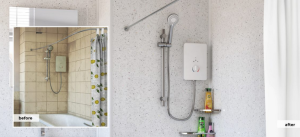
Tiles have been the default bathroom finish for decades, but they come with ongoing costs that don’t always show up in the initial budget.
Grout lines are the main issue. They trap moisture, discolour over time, and provide exactly the conditions mould needs to take hold. In social housing, where void periods between tenancies are often short and maintenance teams are stretched across hundreds of properties, that’s a recurring problem rather than an occasional one.
Tiled bathrooms also take longer to install and longer to repair. A cracked tile or failing grout joint typically means re-tiling a section of wall, which means time, materials, and a property that’s out of action for longer than it needs to be.
For housing teams managing large portfolios, these aren’t isolated repairs. They’re a pattern that repeats across hundreds of properties every year, and each one adds up in labour hours and material costs.
Why Wall Panels for Bathroom Refurbishments Make Financial Sense
Bathroom wall panels remove the grout problem entirely. Because panels click together using a mechanical locking system rather than relying on grouted joints, there’s no gap for moisture or mould to gather in. That alone addresses one of the most common compliance concerns under Awaab’s Law, since a non-porous, grout-free surface significantly reduces the conditions mould needs to develop.
The installation time difference is significant for housing teams managing void periods. Many panel collections can be fitted directly over existing tiles, provided the surface is sound and flat, which removes the need to strip a bathroom back to bare walls. That can turn a multi-day re-tiling job into a same-day or next-day panel installation, cutting down on void periods and getting properties back into use faster.
Durability matters just as much over the longer term. A properly installed panel system comes with a 30-year guarantee when fitted according to instructions, which is a meaningfully longer lifespan than most tiled finishes manage before grout repair becomes necessary. For housing stock that needs to last across multiple tenancies, that durability translates directly into fewer call-outs and lower long-term maintenance spend.
Built for High-Turnover Housing
Social housing properties see more wear than the average owner-occupied home, simply because of tenancy turnover and the volume of use. Bathrooms in particular need to withstand frequent cleaning, varied use, and the kind of day-to-day wear that comes with multiple households over a property’s lifetime.
Panels are well suited to that demand. The surface is completely waterproof and non-porous, so it’s easy to clean without specialist products, which matters for both tenants and any cleaning contracts run between tenancies. There’s no grout lines to maintain, and no risk of tiles cracking from minor impact in the way ceramic tiles sometimes do.
This durability is also why panels are increasingly specified for shared housing, supported living, and other settings where bathrooms see heavier use than a typical family home.
A Practical Fit for Compliance and Budget Pressures
Housing teams are balancing two pressures at once: meeting compliance standards around damp and mould, and keeping refurbishment budgets under control. Bathroom wall panels address both without requiring a compromise between the two.
The reduced installation time lowers labour costs per job. The grout-free, non-porous surface reduces the recurring mould and damp issues that drive complaints and repair call-outs. And the long-term durability means fewer full bathroom refurbishments over a property’s lifetime, which matters for budgets that are planned years in advance.
Where Panels Fit Across the Housing Sector
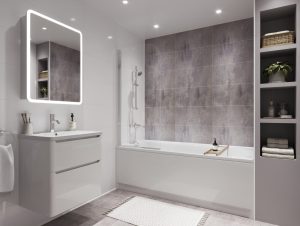
Bathroom panels aren’t limited to general needs housing. They’re equally suited to supported living schemes, sheltered housing, student accommodation, and other settings with similar demands around durability, hygiene, and fast turnaround between occupants.
Showerwall’s sectors page sets out how panel installations apply across these different housing types, with guidance specific to the requirements of each setting.
A Solution That Scales
The case for bathroom wall panels in social housing isn’t really about any single feature. It’s the combination of faster fitting, lower long-term maintenance, and genuine durability that makes the difference at scale. A single bathroom refurbishment might only save a day or two compared to re-tiling. Multiply that across a housing portfolio with hundreds of bathrooms due for refurbishment each year, and the time, labour, and budget savings become substantial.
For housing teams weighing up refurbishment specifications, panels offer a way to meet compliance requirements, control costs, and reduce the maintenance burden on already stretched teams, without compromising on how the finished bathroom looks or feels for the people living in it.