In the world of bathroom wall systems, material terminology can often sound more impressive than it truly is. Few phrases generate as much confusion as “marine plywood”. It is commonly assumed to represent the gold standard for moisture-heavy environments — but the reality is more nuanced.
For specifiers, installers, and homeowners exploring panel solutions through Showerwall, understanding what marine plywood actually offers — and where misconceptions arise — is key to making informed decisions. Let’s separate fact from fiction.
Why Marine Plywood Gets So Much Attention
Marine plywood is traditionally manufactured for structural applications such as boatbuilding, where strength and resilience under intermittent moisture exposure are essential. Its construction uses bonded timber veneers designed to resist delamination when exposed to damp conditions.
Because of its name and association with marine environments, many people instinctively equate it with waterproof performance or superior suitability for bathrooms. However, this assumption overlooks how modern shower panels function as integrated systems rather than relying on the substrate alone.
Showerwall panels, for example, are engineered assemblies in which the decorative laminate surface, factory lamination process, and correct sealing during installation create the waterproof barrier — not the plywood core material itself.
Myth 1: Marine plywood is waterproof
This is perhaps the most persistent misunderstanding. Marine plywood is moisture-resistant in structural terms, but it is not inherently waterproof. Like any timber-based sheet material, it still requires sealing, coating, or lamination when used in wet environments.
The waterproof performance of a wall panel comes from its surface and installation — not simply from the plywood beneath. This principle highlights why system design matters more than the label attached to the core material.
Viewing marine plywood as a standalone waterproof solution risks overlooking the importance of sealing trims, joint systems, and surface laminates — all critical factors in delivering watertight shower panel installations.
Myth 2: Marine grade automatically means higher quality
Another assumption is that marine plywood represents a universal upgrade in quality. While it may offer structural advantages in certain contexts, its intended application is boatbuilding rather than sealed decorative wall systems.
Quality in shower panels is determined by characteristics such as dimensional stability, surface consistency, and bonding compatibility with laminate layers. These attributes ensure panels remain flat, joints align correctly, and decorative finishes remain protected over time.
Showerwall specifies 7-layer eucalyptus or birch plywood precisely because dense hardwood veneers and controlled layering provide excellent stability, smooth bonding surfaces, and resistance to warping — qualities directly relevant to panel performance rather than structural marine use.
Myth 3: Marine plywood is the best choice for bathrooms
It’s easy to assume that a material associated with water must be ideal for bathroom interiors. Yet marine plywood was never designed with laminated panel systems in mind. Its focus lies in structural integrity rather than decorative surface integration.
In contrast, substrates selected for shower panels prioritise compatibility with laminated surfaces and long-term performance within sealed indoor environments. The plywood acts as structural support — much like the base of a kitchen worktop — while waterproofing originates from the surface layer and installation system.
Understanding this distinction helps shift focus toward the performance of the complete panel assembly rather than a single specification term.
Myth 4: The plywood core determines panel waterproofing
This myth stems from oversimplifying material roles. In reality, shower panel performance is influenced by multiple elements working together. Waterproofing is achieved through decorative laminate layers, controlled manufacturing processes, and correct sealing during installation.
The substrate contributes stability and support, but it is only one part of the equation. Overemphasising core material specifications can distract from more influential factors such as installation quality or joint sealing.
Showerwall’s approach reflects industry best practice: selecting plywood types that maintain alignment, protect surface finishes, and support long-term system performance — rather than relying on perceived waterproof characteristics.
Myth 5: “Marine grade” terminology guarantees superior suitability
In competitive markets, terminology can sometimes function as marketing shorthand rather than a meaningful performance indicator. The phrase “marine grade” carries a premium perception that may lead customers to assume enhanced functionality without context.
However, suitability should always be assessed against intended application. Marine plywood is designed for boats and structural uses exposed to intermittent moisture, whereas interior shower panels require stability, bonding consistency, and compatibility with decorative laminates.
Industry-standard eucalyptus and birch plywood configurations used by Showerwall demonstrate how specification decisions are guided by performance outcomes rather than terminology alone.
A Clearer Perspective on Material Selection
Ultimately, marine plywood is neither a miracle solution nor an inferior product — it simply serves a different purpose. Recognising this allows specifiers and consumers to focus on what truly determines performance in shower environments:
- Surface laminate integrity
- Factory bonding processes
- Installation accuracy
- Effective sealing systems
- Dimensional stability of the panel core
By evaluating these elements collectively, material selection becomes grounded in practical performance rather than assumptions shaped by product names.
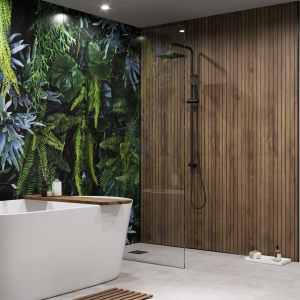
Showerwall’s use of engineered plywood substrates within fully sealed laminated panels reflects a system-based approach aligned with industry best practice. By looking beyond terminology and focusing on how components interact, professionals and homeowners alike can make more confident, informed choices — achieving interiors that balance durability, aesthetics, and reliability.