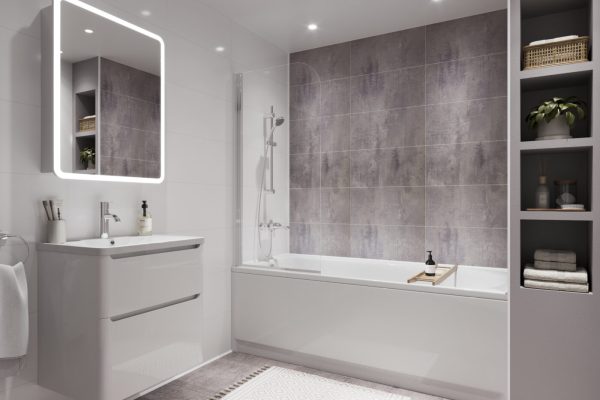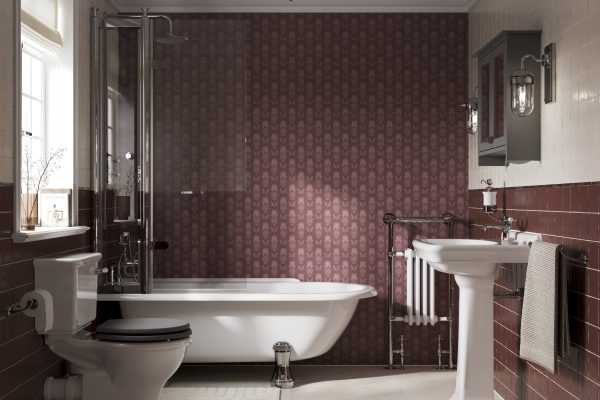
The popularity of laminatewall panels in the bathroom space is going through a sustained period of growth– so how can this increased prominence translate to cost savings for social housing landlords? Mark Devanney, Contracts Sales Director at Showerwall explains.
The ongoing responsibility for landlords to invest in their homes, including replacing kitchens and bathrooms on 20–30-year cycles, means specification is often focused on finding a balance between meeting standards, while controlling costs and ensuring long-term durability.
Traditionally, bathroom tiles have been a trusted go-to product, due to factors such as material cost, existing framework agreements and installer familiarity.
However, as adoption of wall panels in the wider interiors market has continued to grow, their benefits are becoming increasingly apparent for landlords.
In the current climate, where budgets tighten and need to go further than ever before, it is an opportune moment to seriously consider the positive impact wall panels could have for landlords and residents.
Cost vs Value
Cost is ultimately always going to be a key deciding factor in product specification. While the initial investment to refurbish a bathroom using tiles will be lower than with panels – a certain factor in tiles’ continued popularity – this figure alone isn’t a true representation of its cost.
Whether developing new-builds or carrying out bathroom renovations in void properties, value is crucial and needs to be considered with a wider lens.
The saying ‘time is money’ is particularly applicable in this scenario. The speed of panel installation – up to 50% faster than tiles –is a major win in favour of panels, with the added knock-on benefit of reducing property downtime. There is also no time required from specialist trades on-site, speeding up installations and reducing costs.
To truly get an accurate reflection of a tiles vs wall panels cost breakdown across a project, other issues associated with tiles need to be factored into the decision-making process too – including more frequent mould growth, grout cracking and loose tiles, which all create additional maintenance works.
It is too often overlooked that traditional tiling becomes expensive, once labour, preparation, and future repairs are considered.
Installing at Speed
For installers, panels are a much easier installation than tiles and can befitted directly over existing tiles, removing the need for strip-out work and waste disposal.
Showerwall’sLaminate decors feature Proclicktechnology, creating a seamlessfinish without the needs for joining trims, resulting in fasterinstallation as well as reduced downtimeand disruption, which is essential for occupied homes and vulnerable residents.
When these benefits are extrapolated across multiple sites, time and cost savings really add up – the knock-on impact is huge and the initial slightly higher product outlay when compared to tiles is mitigated.
Changing Legislation and Standards
We are in an era where product specification is under the microscope more than ever, and not just from a financial perspective. There is a concerted push at every level to raise the standards of housing in the UK across the board, with government legislation leading the way.
For social housing providers, product choices are increasingly being assessed against a wider range of criteria, including durability, maintenance requirements, energy efficiency, resident wellbeing and whole-life cost.
Ultimately, housing associations and local authorities are expected to deliver homes that are safer, healthier and more sustainable while also reducing the burden of ongoing repairs.
Government legislation initiatives such as the proposed Future Homes Standard, which aims to reduce carbon emissions from new homes and improve building performance, are encouraging specifiers to consider products that contribute to longer lifecycles, reduced waste and lower maintenance demands.
In bathroom environments, where moisture management and longevity are critical, this places greater scrutiny on tiling, which can suffer from grout degradation, water ingress and ongoing maintenance requirements over time.
Alongside this, reforms to the Social Housing (Regulation) Act 2023 which includes Awaab’s Law and wider government commitments to improving housing quality are increasing expectations around living standards and the condition of housing stock.
Social landlords face growing pressure to minimise defects, reduce disruption caused by repairs and maintain consistently high-quality environments for residents.
Bathroom wall panelling aligns closely with these objectives, thanks to its ability to provide a durable, low-maintenance and hygienic tiling alternative,with improved water resistance and the absence of grout.
Performance Post Installation
Ongoing maintenance is one ofthe biggest hidden costs related to bathrooms, but panels can also reduce maintenance callouts and lifecycle costs for landlords.
Showerwall’sgrout-free waterproof system and four-pointSuresealtrim at the base of the panel create a mouldresistant, wipe-clean surface thatrequires minimal upkeep – designed to support safer bathrooms, faster refurbishments, and long-term value.
As regulation continues to focus on quality, sustainability and accountability, wall panelling represents a specification choice that is well suited to the future direction of the sector, offering a practical solution that supports both compliance objectives and long-term asset management strategies.
To view Showerwall’sContracts solutions,visit https://showerwall.co.uk/contracts/